


“Fragile” and “intimate” are the adjectives most frequently used to describe the work of Adriena Šimotová (1926–2014). However, we should immediately point out that the artist herself was, above all, courageous and indomitable. An artist who drew with a knife on paper could not hesitate or doubt. A woman, who at the age of forty-five became a widow and was alone with a son who was barely twelve, had to be strong.
Šimotová met Mládek (1919–2022), a Czech-American collector and later founder of Museum Kampa, at the end of the 1960s. When Mládek organised her very first exhibition in Washington, D.C., in the autumn of 1968, which was dedicated to graphics by contemporary Czechoslovak artists, she chose one of Šimotová’s drypoint engravings for the invitation. The two women later became close friends and remained in touch despite the limitations of old age and worsening health.
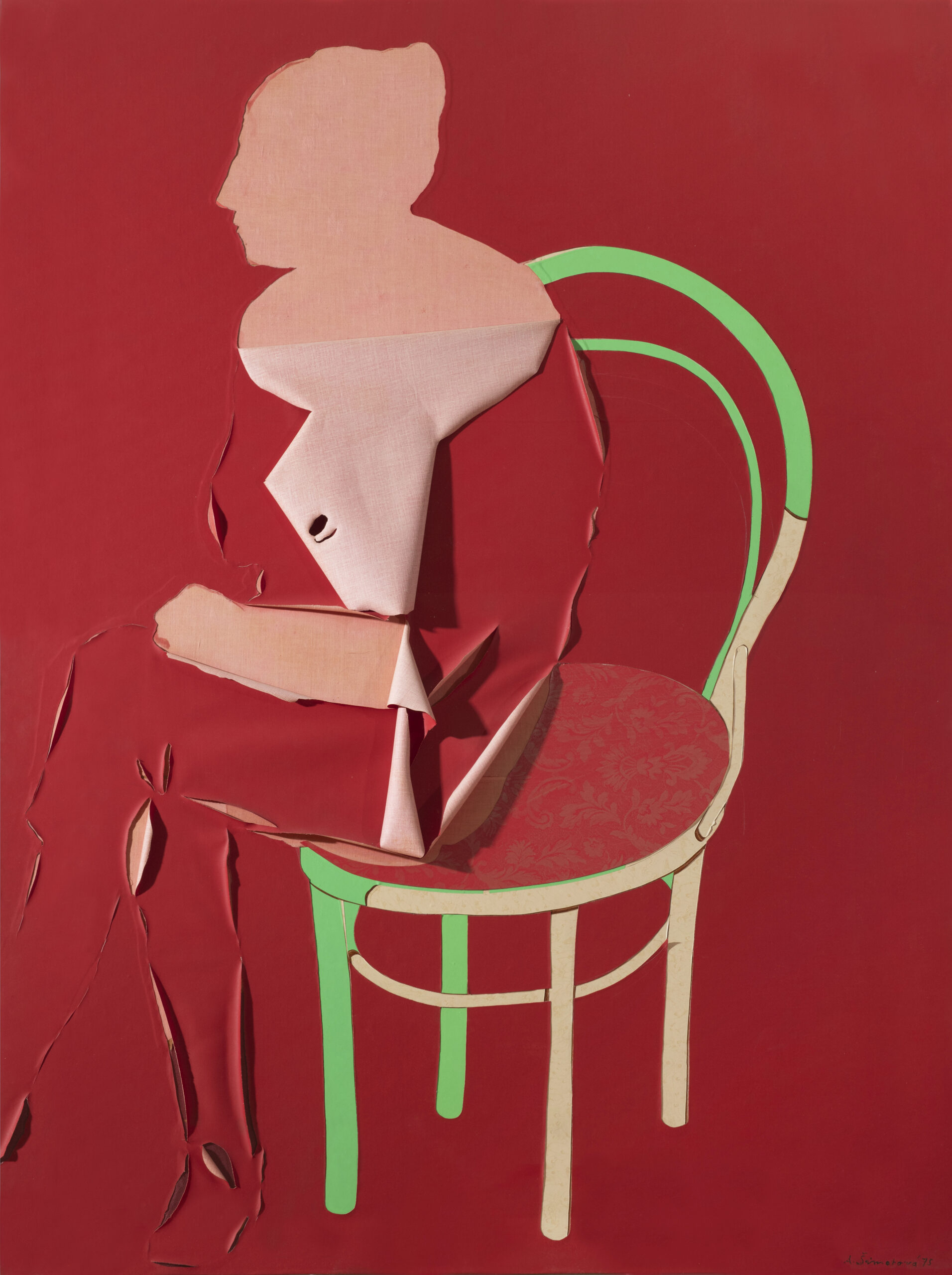
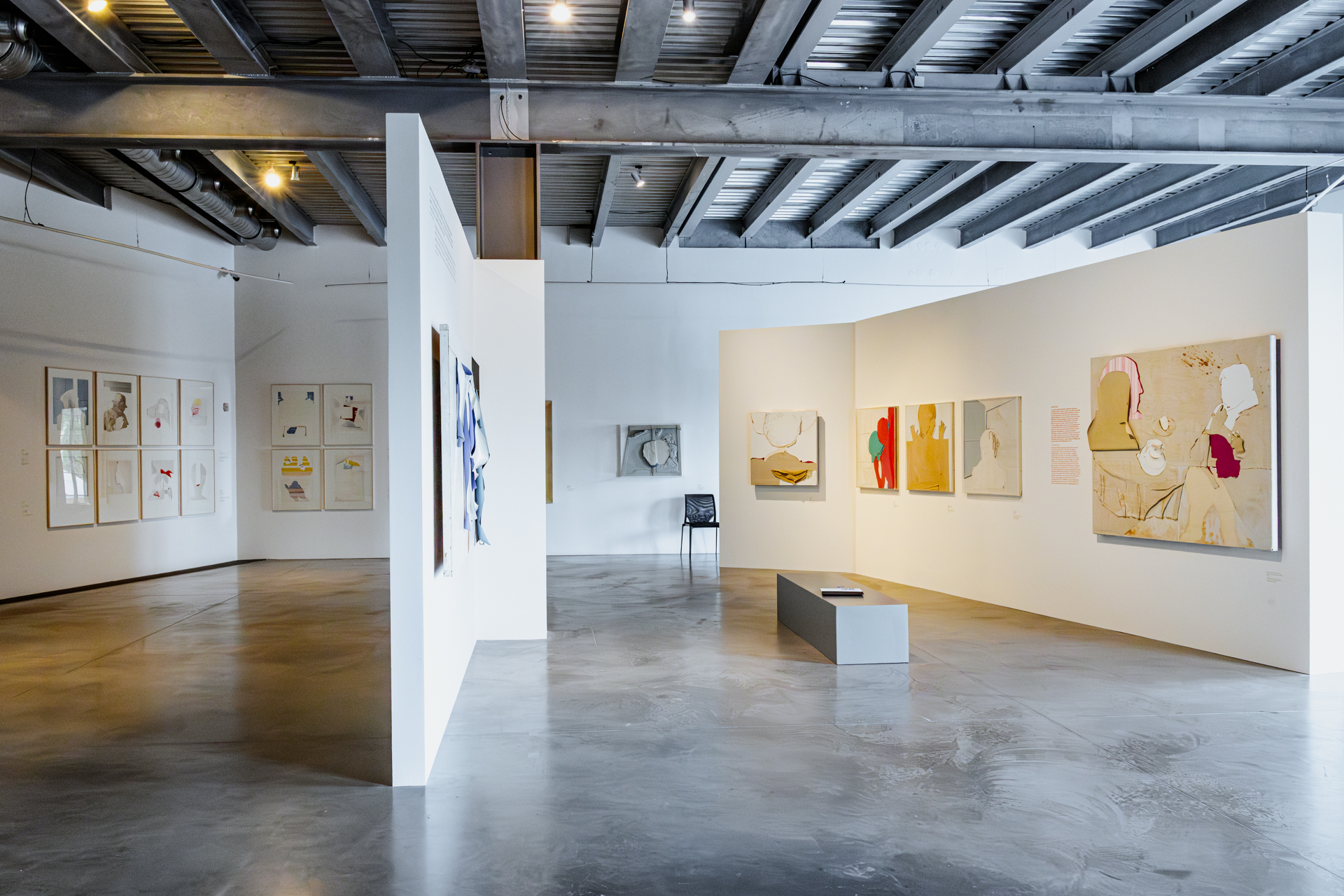
The Dear Adriena… exhibition is being held to mark the 100 th anniversary of the artist’s birth and its core is a collection assembled by the Mládeks. What is particularly valuable are the textile collages from the 1970s and the cut-out drawings on layered carbon paper, created a decade later. Although Šimotová has had several exhibitions at Museum Kampa, some of the exhibits will probably be new even to lovers of her work. In the exhibition, Museum Kampa’s own pieces are supplemented by loans from public and private collections that show other aspects of Šimotová’s work. They include, in particular, her paintings from the early 1970s, in which she responded to the illness and death of her husband Jiří John, and her masterful late Curling Up cycle from 2009–2010.
The exhibition is not conceived as a comprehensive retrospective, but as a commemoration of the friendship of two exceptional figures in Czech culture and a celebration of the radicalism and vitality of Šimotová’s work. Although the themes of memory, vulnerability and the transience of human existence are significant motifs in her work, what is common to all of it is, above all, her effort to avoid repeating herself and to be as authentic as possible in her testimony about the world.
Curator: Jan Skřivánek